Every fuel retailer understands that price matters. But even the most competitive fuel prices can't attract customers if drivers never see them in time to make a decision.
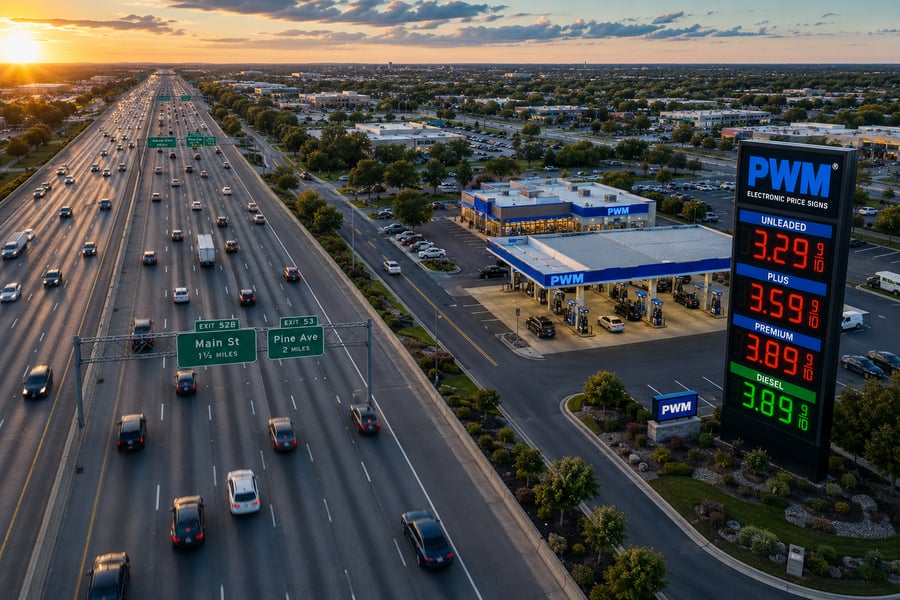
Today's roads are busier, vehicles travel faster, and motorists have more distractions competing for their attention than ever before. Your gas price sign visibility can be the difference between a customer pulling into your station or continuing to the next exit.
Visibility isn't simply about installing a brighter sign. It's the combination of sign size, digit height, viewing angle, placement, surrounding obstacles, and lighting conditions that determines whether your prices are readable from hundreds of feet away.
Let's look at what actually affects gas station sign visibility and how retailers can maximize every passing opportunity.
Why Visibility Matters More Than Ever
Research consistently shows that consumers make many purchasing decisions within seconds. Gas stations are no exception.
Unlike destinations where customers plan their visit, fuel purchases are often spontaneous. Drivers frequently decide where to stop based on three things:
- Fuel price
- Ease of access
- Overall appearance of the station
If motorists cannot comfortably read your prices until they're almost past your entrance, you've likely lost that sale.
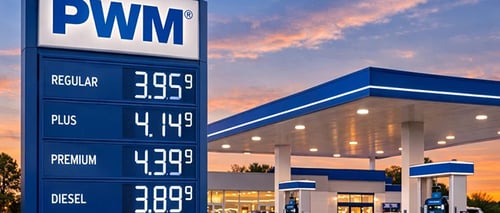
Your fuel price display is essentially your station's billboard. It's working 24 hours a day to communicate one simple message:
"Here's today's price."
If that message isn't immediately clear, its effectiveness drops dramatically.
A highly visible sign also contributes to stronger gas station curb appeal, helping the property appear modern, well-maintained, and trustworthy.
The Relationship Between Speed and Readability
One of the biggest factors affecting readable gas price signs is vehicle speed.
Consider how quickly drivers cover distance:
- At 35 mph, a vehicle travels approximately 51 feet per second.
- At 45 mph, it's roughly 66 feet per second.
- At 55 mph, about 81 feet per second.
- At 65 mph, nearly 95 feet per second.
That means a driver traveling at highway speeds may only have three to five seconds to:
- Notice your station
- Locate your sign
- Read the prices
- Compare them with nearby competitors
- Decide whether to turn
If your sign is difficult to read, that decision window disappears.
Larger digits and better viewing angles give drivers additional reaction time, making it easier to safely choose your station without abrupt lane changes or missed entrances.
Choosing the Right Digit Size
Digit height has one of the greatest impacts on LED gas price sign visibility.
Although there isn't a single "correct" size for every location, larger digits generally provide greater readability at longer distances.
Several factors influence the ideal digit size:
- Road speed
- Distance between roadway and sign
- Number of travel lanes
- Median width
- Elevation changes
- Nearby visual clutter
Stations located directly beside slower neighborhood streets may perform well with smaller displays.
However, locations positioned farther from major highways or multilane roads often benefit from larger displays that remain legible much earlier.
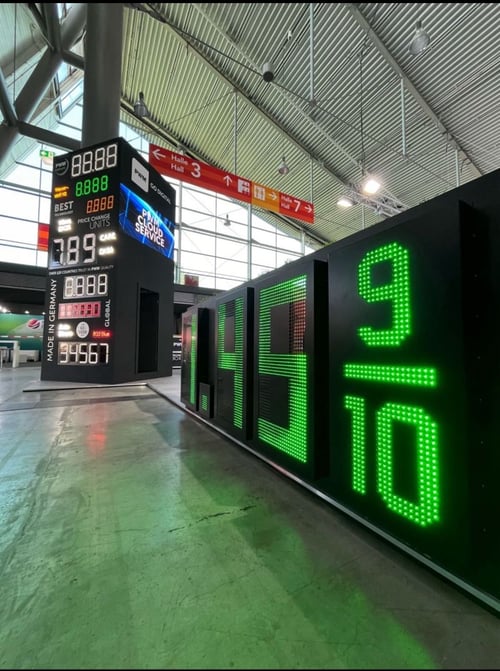
PWM offers digit sizes ranging from approximately 6 inches to massive 120-inch High Rise Digits, allowing retailers to match display size to roadway conditions rather than settling for a one-size-fits-all solution. The larger SMD LED displays are specifically designed to provide excellent long-distance visibility and wide viewing angles.
Common Obstacles That Block Sign Visibility
Even an excellent electronic sign can't overcome poor placement.
Many stations unintentionally reduce visibility through obstacles such as:
Trees and Landscaping:
Beautiful landscaping improves property appearance but can block approaching traffic.
As trees mature, branches often grow directly into sightlines.
Routine trimming should be part of every station's maintenance plan.
Utility Poles:
Telephone poles, traffic lights, electrical equipment, and street signs can partially block pricing information depending on driver approach.
Nearby Buildings:
Shopping centers, restaurants, and new commercial developments may create visibility issues years after a sign was originally installed.
Fuel Canopies:
Canopy architecture can sometimes interfere with viewing the roadside sign from certain angles.
Road Curves:
Driving along curves gives drivers less time to identify prices before reaching the entrance.
Evaluating visibility from multiple approach directions often reveals issues owners don't notice during everyday operations.
Why Brightness Isn't the Only Factor
Many people assume brighter always means better.
In reality, excessive brightness can actually reduce readability.
Modern LED gas price sign visibility depends on several characteristics working together:
Automatic Brightness Adjustment:
Signs should automatically adjust output based on ambient lighting.
Too bright at night creates glare.
Too dim during sunny afternoons makes digits difficult to distinguish.
Viewing Angle:
A narrow viewing angle limits who can see the display.
High-quality SMD LED technology provides wider viewing angles, allowing drivers approaching from different lanes to read prices more easily. PWM's SMD LED digits are designed for increased viewing angles, improved light quality, and reduced reflections.
Contrast:
Strong contrast between illuminated digits and background colors improves legibility.
Low Reflection:
Sunlight reflecting off protective covers can wash out displays.
PWM's High Rise Digits feature low-reflection surfaces that improve readability even in bright daylight.
Weather Conditions:
Rain, fog, snow, dust, and glare all reduce visibility.
Quality lighting systems maintain readability across changing environmental conditions.
Fuel Station Signage Should Match Real Driving Conditions
When evaluating fuel station signage, it's important to think like a driver, not a station owner.
Walking up to your sign from the parking lot doesn't accurately represent how customers experience it.
Instead, evaluate:
- Morning sun
- Afternoon sun
- Nighttime lighting
- Rainy weather
- Rush hour traffic
- Multiple approach directions
Many retailers are surprised to discover their pricing is only clearly visible from one lane of traffic.
A Quick Visibility Checklist for Fuel Retailers
Ask yourself these questions:
✓ Can drivers read prices before reaching the entrance?
✓ Is the sign visible from every approaching lane?
✓ Are trees or landscaping blocking any portion?
✓ Are the digits appropriately sized for roadway speed?
✓ Does brightness automatically adjust throughout the day?
✓ Does glare reduce visibility during sunrise or sunset?
✓ Are competitors easier to read from the same distance?
✓ Is the sign positioned for maximum exposure rather than convenience?
Even small improvements in visibility can translate into more opportunities for customers to choose your station.
Technology Has Changed Driver Expectations
Consumers have become accustomed to crisp, high-quality digital displays everywhere, from smartphones to vehicle dashboards.
Outdated, dim, or inconsistent price displays can unintentionally signal that an entire station is aging.
Modern SMD LED technology offers improvements beyond simple illumination, including better energy efficiency, wider viewing angles, enhanced durability, and long service life. PWM pioneered SMD technology for fuel price displays and offers integrated solutions compatible with major point-of-sale systems, helping retailers modernize their signage while simplifying operations.
A well-designed electronic price sign doesn't just communicate prices. It reinforces professionalism and helps create a stronger first impression.
Visibility Is an Investment in Every Passing Vehicle
Thousands of vehicles may pass your station every day. Every one of those drivers represents an opportunity, but only if they can clearly see your prices with enough time to react.
Improving gas price sign visibility isn't about having the brightest sign on the street. It's about designing a display that accounts for speed, distance, viewing angle, weather, roadway conditions, and real-world driver behavior.
At PWM Electronic Price Signs, visibility has always been a core design principle. From advanced SMD LED technology and wide viewing angles to High Rise Digits and customizable display sizes, PWM helps fuel retailers create readable gas price signs that stand out in virtually any environment.
Whether you're replacing an aging display or planning signage for a new location, investing in visibility can help your station make a stronger first impression, long before customers reach the pump. Contact PWM Electronic Price Signs today to find the right electronic price sign solution for your fuel retail location.