
5 min read
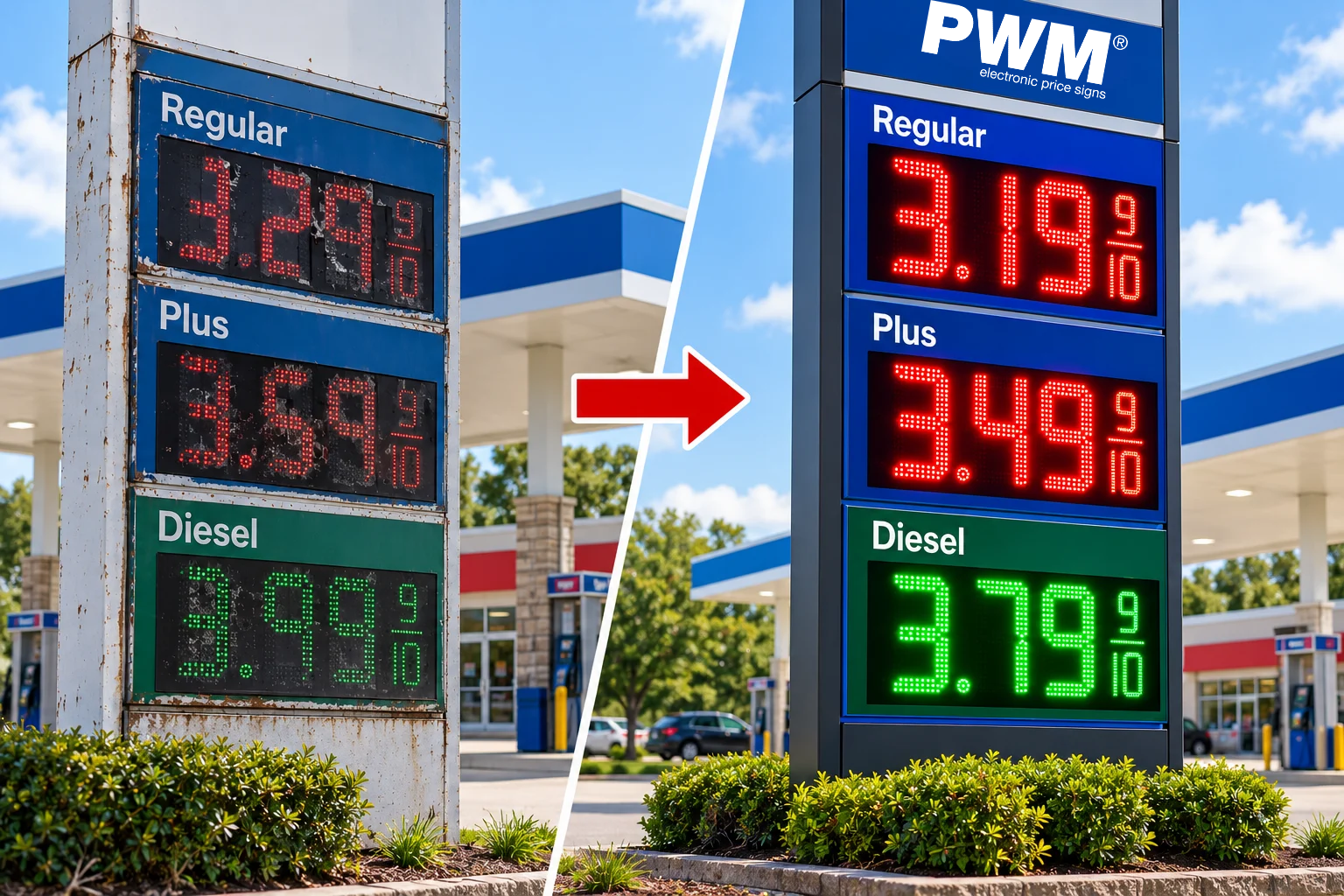
7 Signs It's Time to Upgrade Your Gas Station Price Sign
16 Oct, 2026
7 Signs It's Time to Upgrade Your Gas Station Price Sign
10:32
Your gas station price sign is one of the first things customers notice about your business. Before drivers see your fuel pumps, convenience store, or available services, they often see your prices displayed along the road. But what happens when that sign becomes outdated, difficult to read, or unreliable?
For gas station owners, an aging price sign can create more problems than expected. Dim LEDs, malfunctioning digits, and complicated price updates can affect daily operations, customer confidence, and your ability to compete with nearby stations.
While electronic gas price signs are designed for long-term performance, even reliable equipment eventually requires maintenance or replacement. Knowing when to invest in a gas station price sign replacement can help you avoid unnecessary repair expenses and improve your station's visibility.
Here are seven signs that it may be time for a gas station sign upgrade.
1. Your LED Digits Are Fading or Becoming Difficult to Read
One of the earliest warning signs of an aging electronic price sign is declining brightness.
LEDs gradually lose light output as they age, particularly when exposed to years of direct sunlight, temperature fluctuations, and continuous operation. Eventually, digits that once appeared bright and clear may become difficult to distinguish.
This becomes especially problematic during daylight hours when sunlight competes with the display.
Consider how quickly drivers must process roadside information. At 55 miles per hour, a vehicle travels approximately 81 feet per second. That means a driver covers more than 400 feet in just five seconds.
If customers cannot read your prices until they are close to your entrance, they may not have enough time to make a decision.
When to consider replacement: If your sign remains difficult to read after checking brightness settings, cleaning the display, and addressing maintenance issues, upgrading to modern LED technology may be the better investment.
2. Your Sign Has Inconsistent Brightness
Does one number appear brighter than another? Are certain sections noticeably dimmer, especially at night?
Inconsistent brightness can make an otherwise functioning sign appear damaged or poorly maintained.
Several factors can contribute to uneven illumination, including:
- Aging LED modules
- Electrical or power supply problems
- Deteriorating components
- Malfunctioning brightness controls
- Differences between replacement and original LED modules
Modern electronic gas price signs can incorporate automatic brightness adjustment, allowing displays to respond to changing lighting conditions.
This is important because maximum brightness is not always ideal. A display that is too bright at night can create glare, while one that is too dim during the afternoon may become nearly invisible.
When to consider replacement: If brightness problems affect multiple sections or continue despite repairs, a newer display may provide more consistent performance.
3. Individual LED Segments or Entire Digits Have Failed
Few things make a gas station sign look more outdated than missing or malfunctioning numbers.
A failed LED segment can transform a recognizable digit into something confusing. In some cases, an entire number may stop illuminating.
Beyond appearance, these problems can interfere with accurate price communication.
For example, if a malfunctioning digit makes a displayed price difficult to interpret, customers may misunderstand the advertised fuel cost.
Not every failed segment requires replacing the entire sign. Modular systems may allow individual components to be repaired or replaced.
However, repeated failures across multiple digits can indicate broader equipment deterioration.
When to consider replacement: If segment failures are becoming frequent or repairs no longer restore dependable operation, replacing the LED price sign may be more practical than continuing to replace individual components.
4. Updating Fuel Prices Has Become Complicated or Time-Consuming
Fuel prices can change quickly, and your signage needs to keep up.
According to the U.S. Energy Information Administration, gasoline prices are influenced by factors such as crude oil costs, refinery operations, seasonal demand, and distribution conditions.
For gas station operators, these fluctuations make efficient price management especially important.
Older systems may require employees to manually enter updates, use outdated controllers, or troubleshoot communication issues between the store and roadside display.
For businesses managing multiple locations, these challenges become even more significant.
Modern electronic gas price signs can simplify the process through remote price management and integration with compatible point-of-sale systems.
PWM's TRACK technology, for example, offers centralized price management, remote controls, and diagnostic capabilities that help operators manage their signage more efficiently.
When to consider replacement: If price changes regularly require excessive employee time, outdated equipment, or repeated troubleshooting, a gas station sign upgrade could improve daily operations.
5. Replacement Parts Are Becoming Difficult to Find
An electronic price sign is only as dependable as the components supporting it.
Over time, manufacturers may discontinue older equipment, making replacement parts increasingly difficult to obtain.
Common challenges include unavailable LED modules, obsolete controllers, discontinued power supplies, and compatibility problems with newer components.
When parts become scarce, even a relatively simple repair can turn into an extended outage.
Before replacing an entire sign, determine whether the manufacturer still supports your equipment and whether compatible replacement components are available.
It's also worth evaluating the manufacturer's warranty, technical assistance, and service network.
When to consider replacement: If essential parts are discontinued or repairs depend on unreliable sources for used components, investing in a supported system may offer greater long-term reliability.
6. You're Spending Too Much on Recurring Repairs
Occasional maintenance is a normal part of owning electronic signage. However, repeated service calls can quickly become expensive.
Beyond the direct cost of repairs, malfunctioning signage may create additional expenses through employee troubleshooting, downtime, and missed opportunities to communicate prices clearly.
Consider a hypothetical example: If your station requires four repairs annually at $400 per visit, that's $1,600 in yearly service expenses.
Over three years, those repairs would total $4,800, excluding additional downtime or operational disruptions.
Rather than focusing exclusively on the initial purchase price of new signage, consider the total cost of ownership.
A newer system with dependable components, accessible service, and efficient controls may provide better long-term value.
When to consider replacement: If annual repair expenses are increasing or approaching a meaningful portion of replacement costs, request an estimate for a new system and compare the options.
7. Your Competitors Have More Visible, Modern Signs
Sometimes, the strongest indication that your signage needs an upgrade is located across the street.
Take a moment to compare your station's sign with nearby competitors.
Are their prices easier to read from a distance? Do their displays maintain consistent brightness throughout the day? Are their signs more noticeable from multiple traffic lanes?
Modern LED technology has improved considerably, offering advantages in viewing angles, illumination, and display flexibility.
PWM's SMD LED technology, for example, is designed to improve viewing angles and reduce reflections, helping drivers read prices under different conditions.
Visibility matters because customers often have only a few seconds to compare nearby stations before deciding where to stop.
An outdated sign may unintentionally create the impression that your entire facility needs attention, even when your pumps, store, and services are well maintained.
When to consider replacement: If neighboring stations consistently have clearer, more readable signage, upgrading may help strengthen your competitive position.
Should You Repair or Replace Your Gas Station Price Sign?
Not every malfunction means it's time for a complete replacement.
A relatively new sign experiencing an isolated power supply issue or communication problem may only require a straightforward repair.
However, replacement becomes more attractive when several warning signs occur together.
Before making a decision, evaluate the following:
- Equipment Age: How long has the current sign been operating?
- Repair Frequency: Are maintenance problems becoming more common?
- Parts Availability: Can the manufacturer still support the system?
- Operational Efficiency: Can prices be updated quickly and accurately?
- Roadside Visibility: Can approaching drivers easily read the display?
- Future Needs: Will the existing equipment support planned station improvements?
A professional signage assessment can help determine whether targeted repairs, replacement digits, or a complete system upgrade makes the most financial sense.
Upgrade Your Gas Station Signage With PWM Electronic Price Signs
Your gas station price sign should make daily operations easier, not create additional challenges.
Whether you're dealing with fading LEDs, recurring repairs, or outdated price management technology, upgrading your signage can improve visibility, simplify operations, and help your station remain competitive.
At PWM Electronic Price Signs, we offer advanced LED signage solutions designed for durability, readability, and efficient price management. From high-visibility SMD LED digits to intelligent TRACK controls and remote price-changing capabilities, our products help fuel retailers modernize their signage with confidence.
Is your current price sign showing its age? Contact our team today to explore your gas station price sign replacement options and find the right solution for your location.
Featured Articles

Subscribe to Our Blog